

We Are the Drum and the Scribe: Black Art In America Collection at the Bo Bartlett Center
We Are the Drum and the Scribe: Black Art In America Collection at the Bo Bartlett Center
January 20th - May 16th

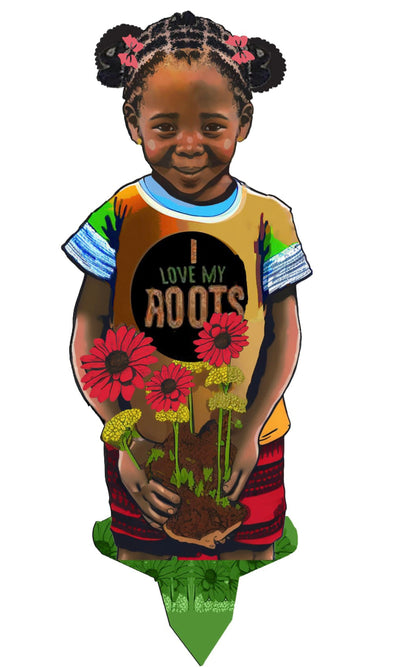
Ochanya by Ejiroghene Adewale (Dorsey Collection)
Presented under the banner We Are the Drum and the Scribe, the exhibition will take place at the Bo Bartlett Center (Columbus, GA). Through this show, Black Art In America (BAIA) acts as both “the scribe,” safeguarding cultural legacy, and “the drum,” amplifying Black voices across the nation. The diversity of styles and perspectives — spanning generations, mediums, and themes — offers a rich, layered experience. This exhibition not only celebrates artistic excellence but also powerfully reaffirms that Black stories belong at the center of American art history.
This exhibition promises to be a compelling showcase of over 40 powerful works drawn from the private collection of the Najee & Seteria Dorsey collection and the company’s holdings. The collection brings together major names in contemporary Black visual art — from established masters such as Kerry James Marshall, Wadsworth Jarrell, Michael Ellison, and David Driskell to vibrant contemporary voices including Dr Fahamu Pecou, Alfred Conteh, Beverly Smith, Traci Mims, Kevin Williams, Jamaal Barber, Woodrow Nash, Najjar Abdul‑Musawwir, Ronald Walton, Ejiroghene Adewale, Khalif Thompson, Brittney Leanne Williams, among many others. This gathering underscores BAIA’s enduring mission — to document, preserve, and elevate Black artistic expression.

Many Rivers by Dr Fahamu Pecou (Dorsey Collection)
Please join us in celebrating We Are the Drum and the Scribe at the public reception on February 19th, 6-8pm!

Baldwin by Khalif Thompson (Dorsey Collection)
Black Collectors Have Preserved the Voices of Black Artists, Now They Are Amplifying Them
By Shantay Robinson
(Essay originally published in the catalog "Black Is Beautiful: recent gifts from Black Art in America and Najee & Seteria Dorsey" to the Columbus Museum 2021)
The heavily publicized incidences of racism in this country in recent times are weighing on the consciousnesses of museum curators. They are working to fill in gaps in their collections where Black presence is lacking. Kerry James Marshall calls this gap the “vacuum in the image bank.” The artworld is slowly opening and most recognize it is a long game that the entire art ecosystem needs to play a part in. Many Black art collectors have been playing their role for decades. Now is the time for Black artists to score.
Black artists have long been denied entry into the art establishment. In 2009, the late David Driskell was honored at the Birmingham Museum of Art, the museum that had turned him and his art students away when they attempted to visit on a day outside of the designated Tuesday for Black visitors. In the 1950s and 1960s the museum was a department of the City of Birmingham and was subject to Jim Crow laws. The ideology of separate but equal excluded Black people in Birmingham from enjoying art at their leisure. Ironically, the first artwork by a Black artist the museum purchased was a painting by Driskell in 1972.
The 1960s was a time when Black people reclaimed their humanity, and artists at this time were no exception. In the 1960s notable artists Romare Bearden, Norman Lewis, Hale Woodruff and others formed Spiral, a group formed to foster creativity and present their art. Although, many in the group are renowned today, the artists were not welcome into the downtown art establishments. At the 1969 art exhibition, Harlem on My Mind at the Metropolitan Museum of Art, no black artists were included. In the 1960s, when the white art establishment felt conscious about the fight for civil rights and Black power, they accepted Black artists but especially when the art was overtly radical.
Paul Robeson once said, “Artists are the gatekeepers of the truth. We are civilization’s radical voice.” In an article for Artsy, Jewels Dodson writes, “Collectors of Black art often see themselves as custodians of the history, culture, and nuanced narratives of the global Black experience. These collectors often feel honor-bound to protect Black artists and preserve Black culture, which for so long, and so often, has been excluded from contemporary art spaces.” Black artists express views that are often marginalized in the mainstream. The narratives they share are not often popular with or important to white conservators of information. So, Black collectors are reimagining the art canon by gifting their collections of artworks by Black artists to art museums to fill in the gaps of the art historical canon.
Collectors have started collections to show their Black children culture that often gets left out of history books and class lessons. These collectors take it upon themselves to educate their own. And more recently, they have been sharing their collections by gifting to museums so that not only their children benefit, but other children, who may not have the advantage of growing up with Black art in their homes, are exposed to art by Black artists, as well.
While historically mainstream art establishments have willfully ignored art by Black artists, Black collectors and historically Black institutions are the saving grace. Black collectors have been doing the work of gathering artifacts to maintain a catalog of work of Black artists to share with later generations. In an Art News article from March 1989, “Black Artists Today: A Case of Exclusion,” Chicago gallerist Isobel Neal states, “Everyone in the business knows that for many collectors, museum exposure is necessary to establish credibility.” Without museum credibility, artists lack the means to further their careers. Black collectors have stepped in to do this work.
Walter O. Evans who was named among the top 100 collectors by Art and Antiques magazine, assembled a collection that spans 150 years of African American art from 19th century landscapes to 20th century work by Jacob Lawrence and Romare Bearden. Evans donated 62 artworks to Savannah College of Art and Design (SCAD) in 2005. The college established the Walter O. Evans Center for African American Studies, a permanent home for the Evans Collection that will include an interdisciplinary facility devoted to the study of African American art, literature, and culture.

"A Council of Women" by Jamaal Barber (Dorsey Collection)
Larry D. and Brenda A. Thompson amassed a collection of art by African American artists from around the country with attention paid to unrecognized artists who are not included in traditional narratives about African American art. In 2012, the couple gifted the Georgia Museum of Art with 37 artworks. The collection aims to offer an in-depth and inclusive understanding of Black artists, their aesthetic, and social concerns.
Patricia Walters, who started building her collection in the mid-1980s donated 152 artworks to Howard University. Her collection represents the work of Kerry James Marshall and Norman Lewis to name a few. Walters’ donation is the second largest in the school’s history. The largest of 450 artworks, was gifted by Alain Locke, a former professor at Howard and dean of the Harlem Renaissance.
Najee and Seteria Dorsey, who are avid art collectors, wanted to contribute to the culture, as well. Their gift of 15 artworks by Black artists to the Columbus Museum, express their belief that “to whom much is given, much is expected.” The Dorseys believe in the artists in the collection they shared. The gift is an opportunity to further the artists’ careers, be part of a legacy, and play a role in the art ecosystem.
Najee Dorsey recognizes that their success with Black Art in America (BAIA) allows them the means to share their holdings with the community of Columbus, Georgia where the couple lived for 7 years. The Columbus Museum was the first museum to give Najee Dorsey a solo show, and he says, “I know they are working to build their collection and holdings of work by African American artists. So, I thought it was a good opportunity to further their mission to increase their holdings.” The Dorsey gift includes legacy artist, Richard Mayhew and contemporary artist, Alfred Conteh among others. The hope is to document the artists’ careers by placing their work in a space that affirms their livelihoods.
Though several Historically Black Colleges and Universities (HBCU) have museums and galleries exclusively to present Black art, selecting a mainstream institution to gift artworks to was a conscious decision made by Dorsey, with considerations like the physical space and economics of the institution in mind. There are pros and cons to both keeping the art centrally in Black institutions and sharing the work with mainstream communities. Dorsey states, “There was a period in time when a majority of institutions ignored the material and collectors, but Black collectors have been collecting for decades. And I think they want to see the work in all institutions.”
The collections of popular contemporary artists also bear much social significance. Sean P. Diddy Combs’ $21.1 million purchase of Kerry James Marshall’s Past Times (1997) in 2018 was the highest amount of money earned for an artwork by a living African American artist. This was a well-thought-out power move; it wasn’t a purchase of passion. Combs was not bidding for the artwork out of the need to own a painting for himself but for the culture. Kaseem “Swizz Beatz” Dean was the impetus for the purchase. He had convinced Combs over 10 years to make a big purchase on Black art. The goal was to keep the Marshall painting in Black hands.
Dean is an avid art collector and advocate for artists’ rights. Though he started out collecting art by masters, he later decided to collect work by artists that he had a connection to. Alicia Keys, Dean’s wife, considers it a cultural duty to support young artists. Antoine Sargent writes for The New York Times, “As the couple have focused and formalized their holdings, the Dean Collection has become one of the most important assemblages in the world of work by African-America artists such as Lorna Simpson, Derrick Adams, Mickalene Thomas, and Nina Chanel Abney.” Keys, with a somewhat sentimental but also strategic gesture for her husband, purchased 80 of Gordon Parks’ photographs spanning the photographer’s career, making them the owners of the largest collection of Gordon Parks’ work.
African American artists, for so long have been ignored, but museums are now working to fill the gaps of their collections with Black artists who have been working diligently for years without recognition. Artist, Noah Purifoy received a survey of his career 11 years after his death and Norman Lewis’ retrospective at the Pennsylvania Academy of the Fine Arts came 36 years after his death. While these artists may have been overlooked by major art institutions until after their deaths, Black collectors have kept their legacies alive.
Without Black collectors who have preserved the culture by collecting artworks by Black artists, there would be no gifts to give or art to borrow to fill in the gaps in our contemporary scramble to appreciate what Black artists have to say. Museums will not be diversified with one or two gifts; it is going to take years to get this work done. As museum leadership reckons with the truth about race relations in this country, we can hope they contemplate how they treat the concept of race within their institutions and with those artists they present.


